“ANGUISH” – Original piece
100,00 €
1 in stock
Description
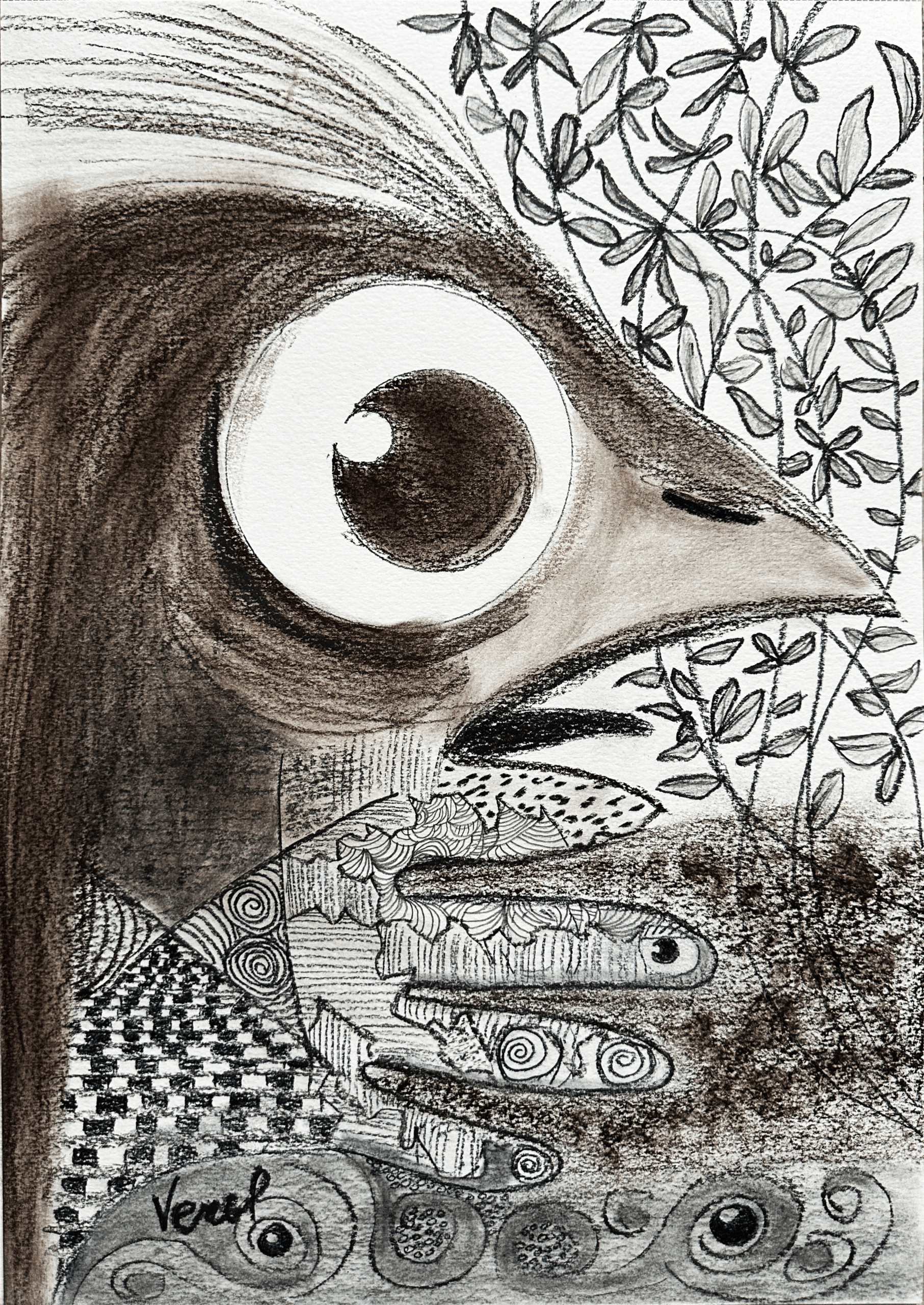
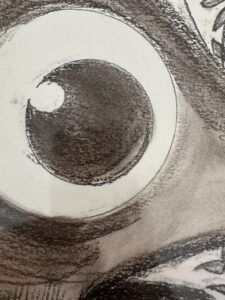
Charcoal and various pencils on slightly grained A3 cardboard size 250 g/m2 – 135 lb.
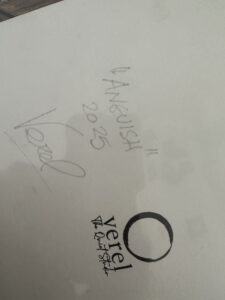
Size: 30×42 cm | 11,81×16,53 inches. Unique piece. Perfectly preserved. Signed by the author. Enclosed certificate of authenticity.
This piece is unique, painted with time, care, and emotion. It’s not just art — it’s an investment in beauty, a creation whose worth can only increase with the years.
Conceptual overview
This work occupies a liminal space between dream and awakening. The artist describes the impetus as a moment of uneasy semi-consciousness: “I seldom have bad dreams and usually when I do dream I do so while gliding towards waking time. And so this is the feeling I get. Anxiety, perhaps anguish as the mysterious hand tightens around the raven’s neck … but the rebirth just behind him is already coming.”
In this way the piece becomes a visual articulation oftension: a tightening, a grasp, something alive and uncertain, but also the glimmer of something beyond — not simply despair but the possibility of emergence. The title “Anguish” is apt not as a static state but as a transitional one: anguish as the threshold.
Formal and material reading
In using charcoal and pencil on textured cardboard, the artist embraces both immediacy and delicacy. The choice of A3 size gives a scale that is intimate yet large enough to immerse the viewer. The grained cardboard surface invites the marks of the hand and the edges of shadow to play across the page, giving depth and materiality to what might otherwise be a purely conceptual gesture.
The monochrome (or near monochrome) palette — inherent to charcoal work — reinforces the emotional weight of the subject. Without the distraction of strong colour, the viewer is drawn into the play of light and dark, the sharpness of lines, the soft transitions of tone. These formal choices mirror the conceptual one: the moment between sleep and wake, between action and stasis, between fear and hope.
Symbolic and thematic dimensions
Several motifs co-exist in this piece:
The “mysterious hand” tightening around the raven’s neck: this evokes a sense of constraint, entrapment, or control — perhaps internal psychological forces, perhaps external ones.
The raven: a traditional symbol of mystery, transformation, the threshold between life and death, and in some contexts a harbinger of change.
The notion of “rebirth just behind him”: this is crucial — the piece does not dwell in stagnation, but gestures toward what might follow the anguish.
The threshold of consciousness: the state of gliding towards waking, of being in-between, mirrors the aesthetic execution — charcoal marks both raw and meditative, a pause in process.
In sum, the work invites the viewer to reflect onthe moment of crisis— the point at which one is neither fully one state nor another — andthe possibility that lies beyond. The artist challenges the viewer to feel the tension, to hold it, and then to look past it.
Placement within the artist’s practice
The work appears within a series of “Original Pieces” offered by The Quiet Studio, a space described as “a real place and a state of mind … where the noise of the world fades, and what’s left is the simple joy of creating—just for the sake of it.”
In this context,Anguishmay be read as part of a broader investigation into quiet interior states, mental landscapes, and the liminal. The anonymity of the author emphasises that the work speaks first — “the work to resonate”, rather than the personality behind it. This piece therefore embodies both a personal moment of reflection and an invitation for the viewer to bring their own internal state into the space of the artwork.
Curatorial considerations
For display, the piece’s intimate scale invites a quiet setting: a dimly lit space, perhaps with a soft directional light that reveals the charcoal texture without causing glare. Framing in a minimal, neutral frame would allow the viewer to focus on the mark-making and tension of the piece. In a group show, placingAnguishin sequence with works that explore “nightmares,” “anxiety,” or “rebirth” would situate it within a coherent narrative arc.
Interpretively, it can serve as a pivot: the moment of deepest internal grip before transformation. Ideally, the label might include the artist’s quote regarding gliding toward waking time, offering visitors insight into the threshold that the work inhabits.
Invitation to the viewer
I encourage you to stand close, to let the charcoal lines trace against your gaze. Notice the hand, the raven, the space around them. Feel the tightness, yes—but also the hesitation, the pause, the breath before something else. Spend a moment in that threshold. What stirs behind the grasping hand? What might emerge just beyond the raven? The work asks not for resolution but for presence.
Additional information
| Weight | 0,11 kg |
|---|