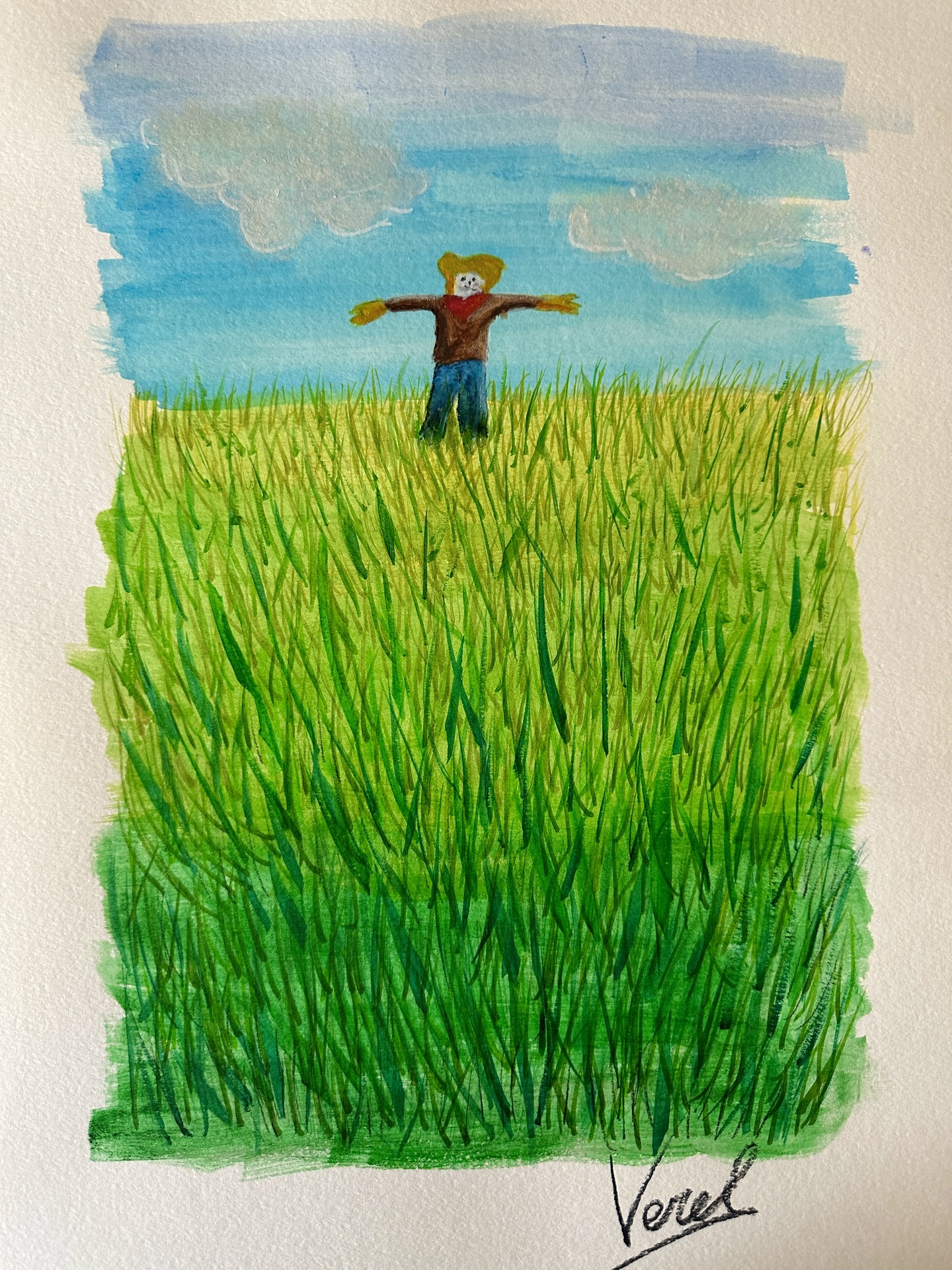
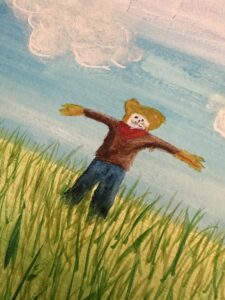
“THE LONELY SCARECROW” – Original piece
100,00 €
1 in stock
Description
Watercolors, various pencils and charcoal on slightly grained A3 cardboard size 250 g/m2 – 135 lb.
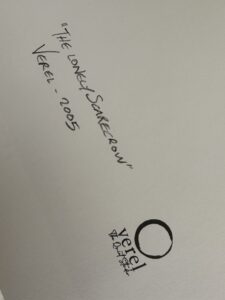
Size: 30×42 cm | 11,81×16,53 inches. Unique piece. Perfectly preserved. Signed by the author. Enclosed certificate of authenticity.
This piece is unique, painted with time, care, and emotion. It’s not just art — it’s an investment in beauty, a creation whose worth can only increase with the years.
Conceptual Overview
InThe Lonely Scarecrow, the artist channels the archetypal figure of the scarecrow—a solitary sentinel in a field—transforming it into a vehicle for introspection and psychological space. The term “lonely” foregrounds absence and waiting, while the scarecrow metaphor evokes stillness, vigilance and a threshold between life and dormancy. Within the studio’s ethos—that of a place “where the noise of the world fades, and what’s left is the simple joy of creating — just for the sake of it” — this work invites the viewer to contemplate solitude not as lack but as presence: the quiet in the midst of the field, the figure in the open landscape, the still-watcher.
Formal & Material Reading
The choice of charcoal and pencil on textured cardboard creates a richly tactile surface where gesture and erasure both show. The grain of the cardboard becomes part of the image: it holds the marks, shadows, subtle transitions, and invites the viewer to lean in and observe the texture. The size (A3) offers an intimate scale: one can approach, peer closely at the details, then step back to sense the figure in its space.
Visually, the scarecrow is likely rendered with a mixture of fine lines (for structure) and more diffuse shading (for atmosphere). Its isolation might be manifested by surrounding negative space, minimal background detail, and absence of distraction. The monochrome—or near monochrome—palette typical of the studio’s “Original Pieces” further emphasizes mood, materiality, and the quiet weight of presence rather than narrative bustle.
Symbolic & Thematic Dimensions
Solitude and presence: The scarecrow stands alone, yet its being is inscribed in the landscape—it watches, receives, endures. The loneliness observed might reflect both external isolation and internal stillness.
Threshold and guardianship: A scarecrow stands at the edge of harvest, between field and sky, growth and rest. Here, it suggests a liminal vantage point—between action and pause, vigilance and letting go.
Making and absence: The scarecrow is artificially made, yet tasked with a living role (warding off birds, guarding crops). This duality resonates with the studio’s self-description as a “state of mind” and place of making. The figure becomes meta-symbolic of the artist’s presence and absence: made yet still, visible yet vigilant.
The field as interior landscape: While the setting may evoke open land, the piece invites reading as interior: the empty field may echo internal terrain, the scarecrow the suspended self.
Time and transformation: Loneliness suggests duration. The scarecrow endures through seasons, storms, silence. The work therefore might invite reflection on what persists when activity ends.
Placement within the Artist’s Practice
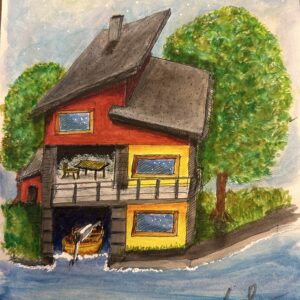
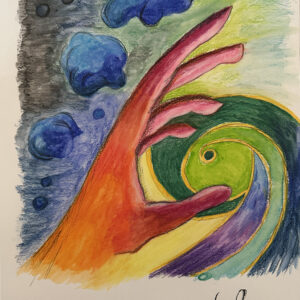
The Lonely Scarecrowis listed among the “Original Pieces” of The Quiet Studio in the Landscapes category. It sits alongside works such asThat Little Red HouseandCreation, pieces that explore quiet motifs, minimal narrative, and introspective themes. The studio’s anonymity of the artist (to let the work speak) further positions the piece as an invitation to the viewer’s own reflection rather than an expression of ego.
Curatorial Considerations
Display: The work benefits from a contemplative environment—soft ambient lighting that gently reveals the texture of the board and the charcoal’s depth, minimal framing (a thin dark frame or even a floating mount) so that materiality remains visible. Because of its intimate size, the viewer should be encouraged to approach to engage with detail, then step back to observe the whole.
Exhibition context: In a group show, this piece might serve as a quiet turn in a narrative arc: following works of tension or dream-state, this could be the meditation on stillness and waiting. Alternatively, it could act as a standalone focusing station—inviting the audience into slower looking. Placing it near works that invoke fields, thresholds, guards or watchers would reinforce the theme of watching and waiting.
Label Text:
The Lonely Scarecrowstands at the edge of field and wind, silent sentinel yet full of inward motion. Charcoal and pencil on textured board trace its quiet vigil. Here solitude becomes presence—holding space rather than leaving it empty.
Invitation to the Viewer
Step in close toThe Lonely Scarecrow. See the surface: the fine scratches, the soft smudges, the grain catching light. Notice how the figure hangs in its space—alone yet anchored. Let your gaze linger on the empty field around it. Ask: What is it waiting for? What does it keep watch over? As you retreat, consider your own threshold: the space you inhabit, the moments you stand still in, the intervals between movement. This work asks not for movement but for presence, not for story but for being in the field of the moment.
Additional information
| Weight | 0,11 kg |
|---|